Fat Grafting
In Atlanta, GA Dr. Alexandra Hart



Fat grafting is one of the most powerful tools in modern plastic surgery because it works with your body’s own tissues.
By carefully transferring your own fat from one area of the body to another, Dr. Hart restores volume, corrects contour irregularities, and enhances shape with results that look natural and age gracefully.
At Dr. Alexandra Hart Plastic Surgery in Atlanta fat grafting is approached as both a science and an art. Whether performed surgically or in-office for smaller areas, each treatment is meticulously planned to respect anatomy and long-term tissue health. We invite you to schedule a private consultation to explore your fat transfer options.
Treatment Goal: Restore volume, improve contour, and correct irregularities using the patient’s own fat.
Versatile Applications: Used to restore youthful contours in areas like the face, hands, breasts, buttocks, or labia, and to correct contour deformities after liposuction.
Customized Techniques: Fat harvesting, processing, and placement are tailored to each treatment area.
In-Office or Surgical Options: Small-volume and facial fat grafting can often be performed in the clinic; larger areas are addressed surgically.
Long-Term Results: Transferred fat that survives becomes living tissue, offering lasting improvement.
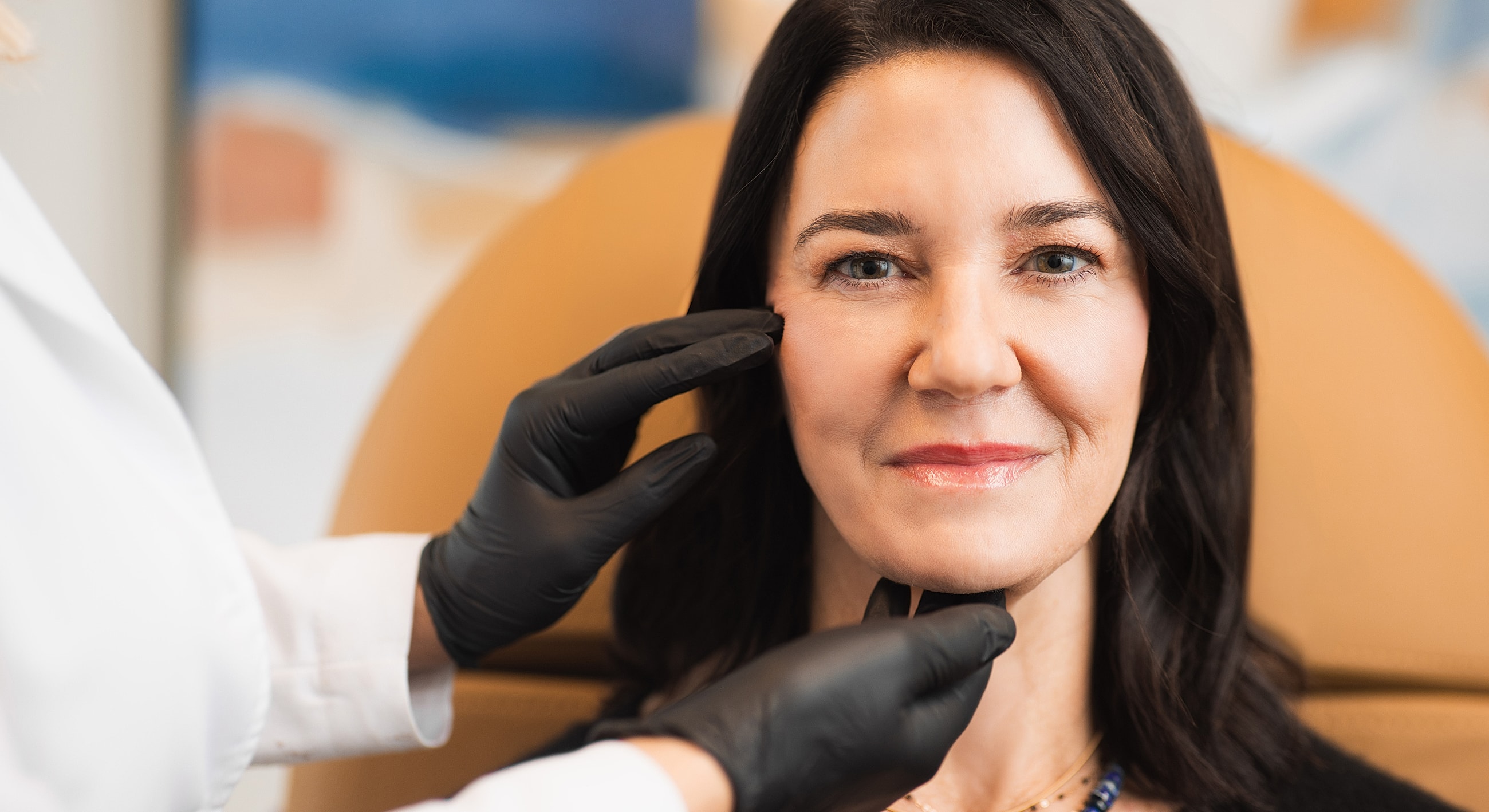
During fat grafting, also known as fat transfer, fat is gently removed from one part of the body and strategically placed into another area that needs volume or contour correction.
Because the tissue is your own, results are soft, natural, and biologically compatible. Dr. Hart evaluates not only where volume is needed, but how it should be restored. Successful fat grafting in Atlanta depends on precise harvesting, careful processing, and meticulous placement to support fat survival and long-term integration.
Fat grafting involves three essential steps:
Smaller-volume and facial fat grafting procedures can often be performed in-office under local anesthesia, while larger grafting procedures are performed under general anesthesia in a certified OR.
Fat grafting is one of the most adaptable procedures in plastic surgery. Popular treatments include:

Regenerative Benefits: In addition to restoring volume, fat grafting also has regenerative properties, as transferred fat contains stem cells that may improve skin quality in the treated area.
Safe, Natural Rejuvenation: By using your own natural tissue, fat transfer provides a soft, realistic look and feel without the risk of allergic reaction.
Dual-Benefit Contouring: In addition to restoring volume in the recipient area, fat grafting provides subtle body sculpting in the donor area (such as the abdomen, hips, flanks, or thighs).
Versatile Applications: The fat injection process allows for precise shaping and can be used to correct complex contour issues, such as irregularities resulting from improperly performed liposuction.
Long-Lasting Results: The results of fat grafting are long-lasting. While a portion of the transferred fat will be broken down and reabsorbed by the body, the surviving fat will become permanently and seamlessly integrated into the surrounding tissue. Dr. Hart’s careful fat purification and injection techniques ensure optimal survival of donor fat tissue.
Fat grafting is especially well-suited for patients seeking a natural approach to volume restoration or contour correction. Candidates must have sufficient donor fat in another area of the body, such as the abdomen, flanks, buttocks, or thighs, to be used for fat grafting. During your consultation, Dr. Hart will assess your anatomy, donor sites, and goals to determine the best approach.
For patients who do not have enough donor fat for this procedure, Dr. Hart offers AlloClae for small volume distribution either in the buttocks or breasts,

The days following your procedure are a time for rest as your body begins to integrate your natural tissue into its new location.
You should expect some mild swelling and bruising at both the site where the fat was collected and the area where it was placed.
While most patients feel comfortable returning to light daily activities within a few days, any initial fullness in the face or body usually softens over the first two weeks as the area heals. Dr. Hart’s team provides concierge-level aftercare support, offering guidance on how to support optimal integration of the transferred cells and ensuring you feel confident and cared for throughout your recovery.

Fat grafting provides soft, youthful fullness that feels entirely like your own because it uses your own living tissue.
While you will see an immediate change in volume, the final look settles in three to six months as the transferred cells establish a permanent blood supply in their new location.
Unlike synthetic fillers that eventually dissolve and require repeat visits, the fat that successfully integrates into your skin remains there indefinitely, aging naturally alongside you. You can expect a subtle but visibly refreshed appearance that enhances the beauty of your natural contours.

When you choose our practice, you are selecting a team that believes your most beautiful look is the one that stays true to you.
Dr. Hart focuses on the careful placement of your own tissue to create a refreshed appearance without any sign of surgery.
Her advanced surgical training and deep knowledge of facial layers mean she can provide the structural support your skin needs with incredible precision. You will receive personalized, white-glove care at every step, ensuring you feel comfortable and informed as you achieve a result that ages gracefully with you.
Fat grafting results can be long-lasting. While a portion of the transferred fat is naturally absorbed by the body during the first few months, the surviving fat cells become living tissue and remain permanently. Long-term results depend on the transfer technique, blood supply in the treatment area, and your individual healing response.
On average, 50 to 70 percent of transferred fat typically survives. Dr. Hart uses meticulous harvesting, processing, and placement techniques to maximize fat retention and achieve smooth, predictable results.
Fat grafting uses your own tissue, eliminating the risk of an allergic reaction and reducing long-term concerns about foreign material. Safety depends on proper technique and anatomical knowledge, which is why your Atlanta fat grafting procedure should be performed by a board-certified plastic surgeon.
Yes. In some cases, additional fat grafting sessions may be recommended to achieve the desired volume or correct more complex contour irregularities. Dr. Hart will guide the timing of your treatment.
Fat grafting is commonly performed on the face, breasts, buttocks, hands, labia, and for the correction of contour deformities after liposuction. Smaller areas, including facial fat grafting, can often be treated in the clinic.
Fat grafting involves very small incisions for fat harvesting and injection. These entry points are typically minimal and fade over time, leaving little to no visible scarring.